Volume 21, Issue 1 (Spring 2026)
Salmand: Iranian Journal of Ageing 2026, 21(1): 26-43 |
Back to browse issues page




Download citation:
BibTeX | RIS | EndNote | Medlars | ProCite | Reference Manager | RefWorks
Send citation to:


BibTeX | RIS | EndNote | Medlars | ProCite | Reference Manager | RefWorks
Send citation to:
Habibi Soola A, Mehri S, Asadi H. The Relationship Between Anxiety, Stress, and Depression and Frailty Syndrome in Elderly Residents of Ardabil City in 2023. Salmand: Iranian Journal of Ageing 2026; 21 (1) :26-43
URL: http://salmandj.uswr.ac.ir/article-1-2861-en.html
URL: http://salmandj.uswr.ac.ir/article-1-2861-en.html


1- Department of Nursing, School of Nursing and Midwifery, Ardabil University of Medical Sciences, Ardabil, Iran.
2- Department of Nursing, School of Nursing and Midwifery, Ardabil University of Medical Sciences, Ardabil, Iran. ,habibiarums@gmail.com
2- Department of Nursing, School of Nursing and Midwifery, Ardabil University of Medical Sciences, Ardabil, Iran. ,
Full-Text [PDF 4923 kb]
(833 Downloads)
| Abstract (HTML) (3714 Views)
Full-Text: (441 Views)
Introduction
The major concern regarding the growth of the elderly population is the increasing prevalence of chronic diseases and disabilities conditions associated with the aging process, which require special attention [3]. Frailty is a clinical syndrome accompanied by changes in multiple physiological systems, reduced physiological reserve capacity, and impaired ability to respond to stress [5]. This syndrome is associated with weakness, weight loss, burnout, reduced daily activity, and an increased incidence of diseases in the individual [6]. At least one out of every four elderly patients undergoing treatment suffers from disorders such as depression, anxiety, and stress. Psychological disorders, due to their negative impact on the health of the elderly, can serve as a precursor to the development of frailty syndrome [15]. The present study aimed to determine the relationship between anxiety, stress, and depression and frailty syndrome in home-dwelling elderly individuals in Ardabil City in 2023.
Methods & Materials
The present descriptive-analytical was conducted after obtaining approval from the Ethics Committee and the Research Deputy of Ardabil University of Medical Sciences. The study population consisted of elderly individuals aged 60 years and older who visited the emergency departments of teaching hospitals in Ardabil City in 2023. A convenience sampling method was employed. Inclusion criteria for the study were: Age of 60 years or older, the ability to communicate verbally, no permanent dependence on a wheelchair, no blindness or severe visual impairment that leads to dependency, and no complete deafness or severe hearing loss that hinders clear communication. The exclusion criterion was the submission of incomplete questionnaires.
The research setting included the emergency departments of Imam Khomeini, Imam Reza, Alavi, and Fatemi hospitals in Ardabil City, where participants were recruited and informed consent was obtained. The Fried Frailty Index, developed in 2001, was used to assess frailty syndrome in older adults. This index includes five items: general fatigue, muscle weakness, walking speed, low levels of physical activity, and weight loss. Data analysis was performed using SPSS software, version 22. To determine the statistical tests for comparing demographic variables, anxiety, stress, depression, and the main research variable, the normality of the distribution of continuous variables was first examined. According to the results of the Kolmogorov-Smirnov test, no significant deviation from a normal distribution was found for any of the continuous variables (P>0.05). Given the normality of the data distribution, parametric tests, including analysis of variance (ANOVA), independent t-test, Pearson correlation coefficient, and multiple linear regression analysis, were used to explore the relationships between the variables and identify predictors of anxiety, stress, and depression.
Results
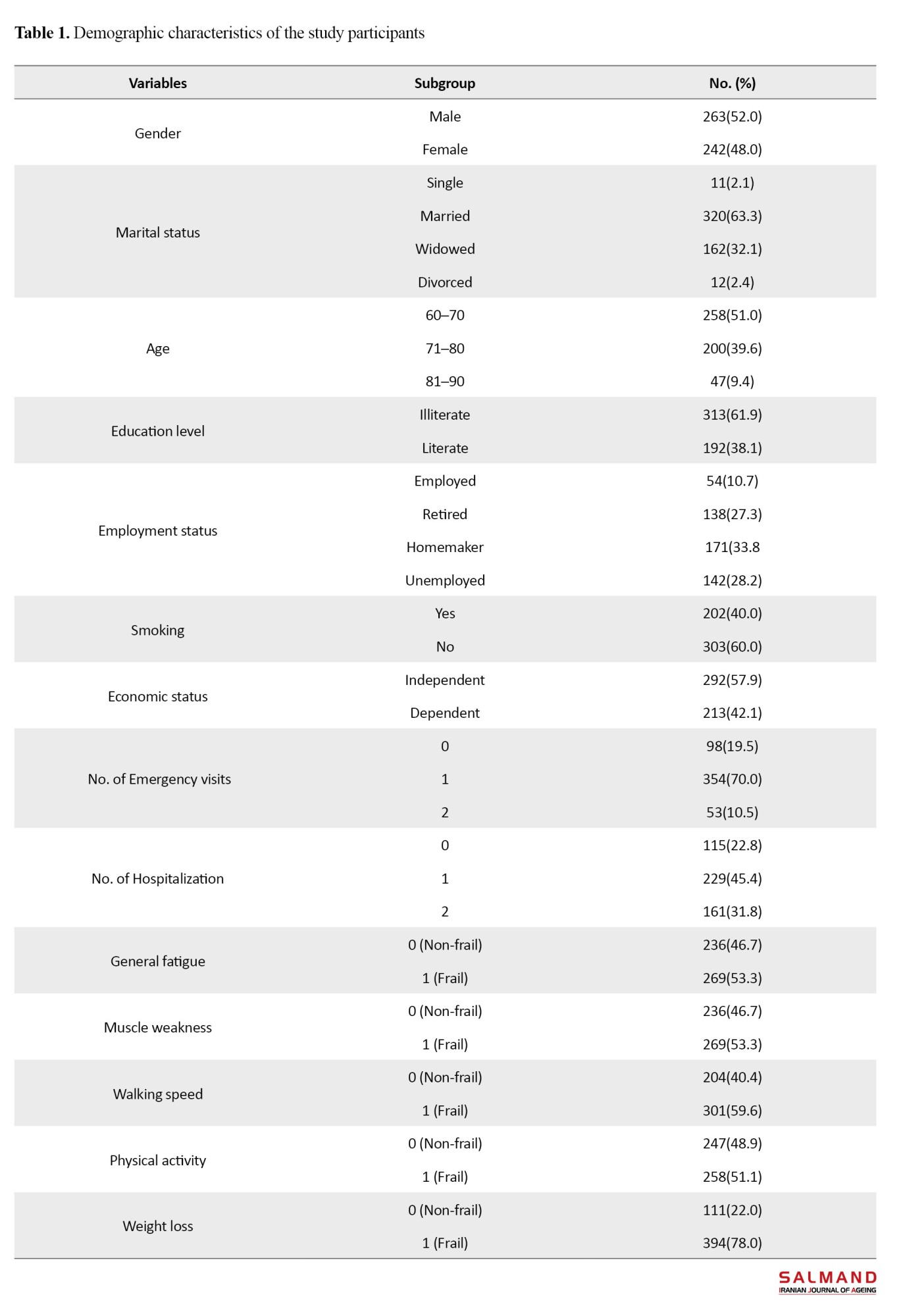
Of the 505 elderly participants in this study, with a mean age of 73.46±6.38 years, 52% were male. The majority of the participants were married (63.3%) and illiterate (61.9%). Also, 57.2% were economically independent, and 70% had visited the emergency department of the hospital at least once (Table 1).
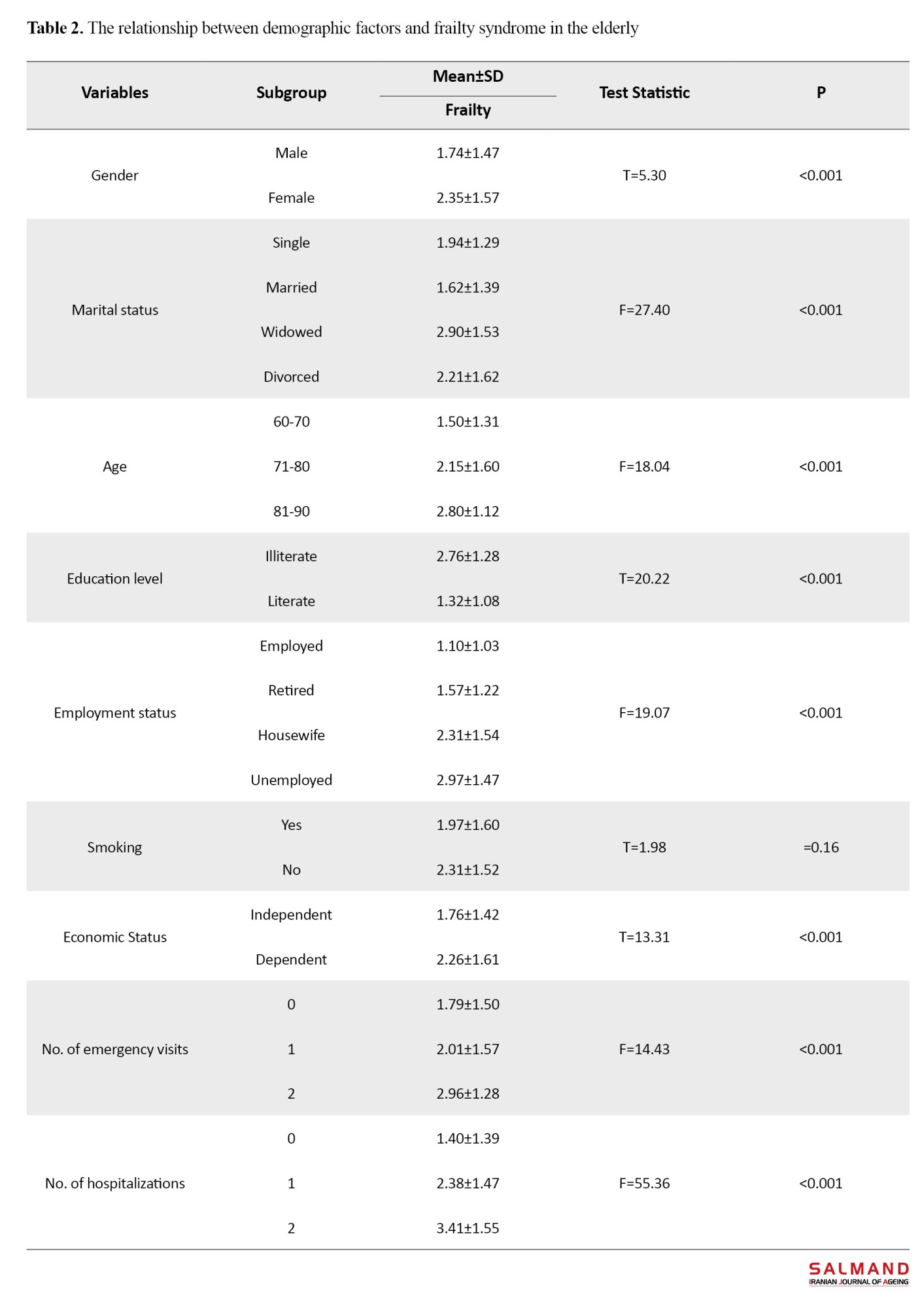
The results showed that 44.16% of the elderly were frail, 38.82% were at risk of frailty, and 17.02% were not frail. The frailty index had a statistically significant relationship with the variables of gender, marital status, age, education level (literate and illiterate), employment status, frequency of emergency department visits, frequency of hospitalizations, and economic status (P<0.05) (Table 2).
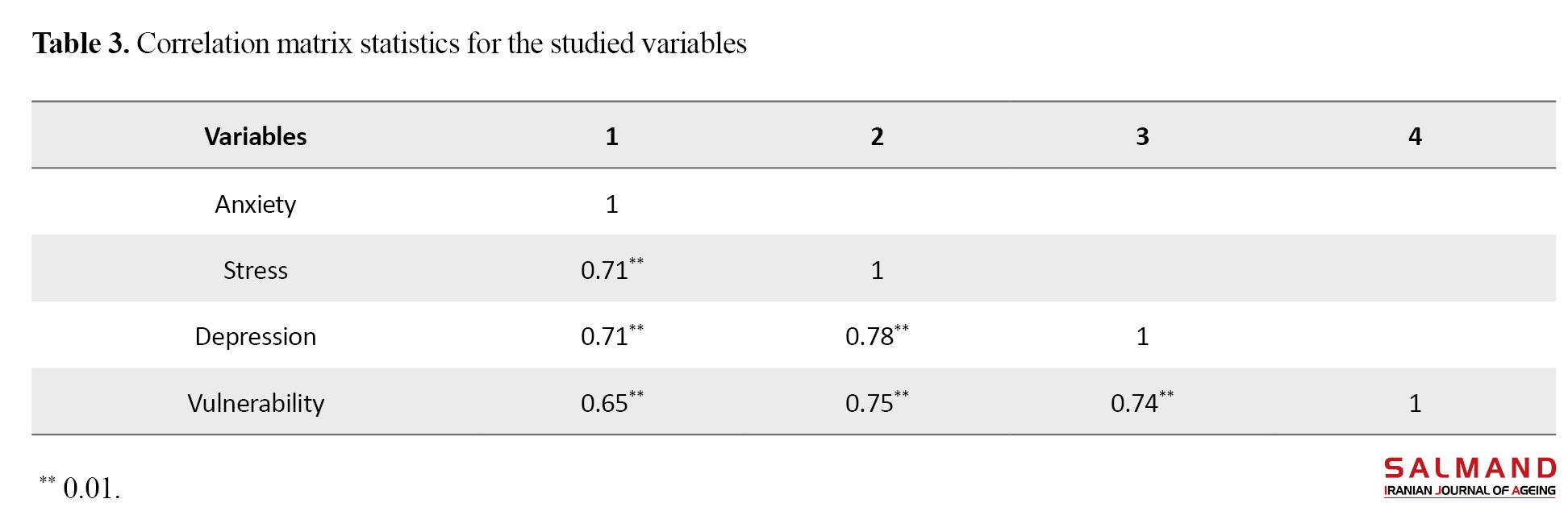
In addition, 51.08% of the elderly experienced depression, 50.69% had anxiety, and 59% suffered from stress. The results of the Pearson correlation test indicated a positive and significant correlation between frailty syndrome and depression, anxiety, and stress (Table 3).
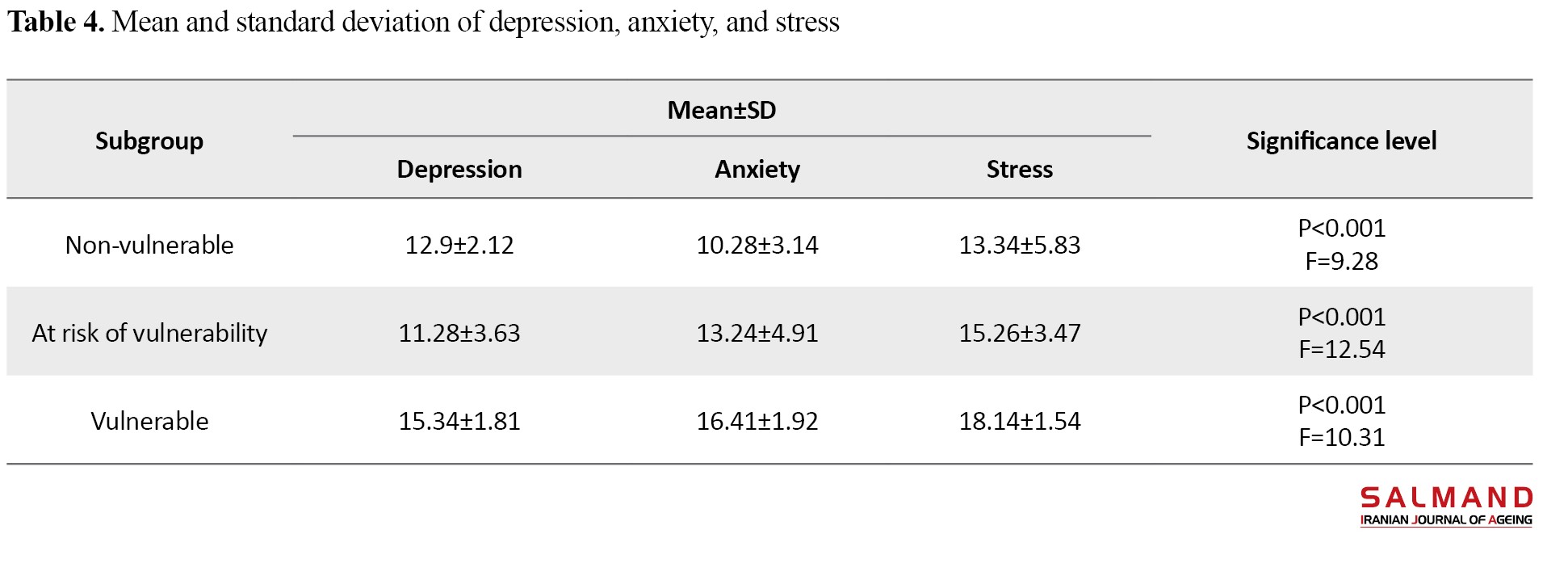
The highest mean levels of depression, anxiety, and stress were observed in individuals with frailty, with values of 15.34±1.8, 16.41±1.9, and 18.14±1.5, respectively. Based on the results of ANOVA, a significant difference was found in the mean levels of stress, anxiety, and depression among the frailty groups (Table 4).
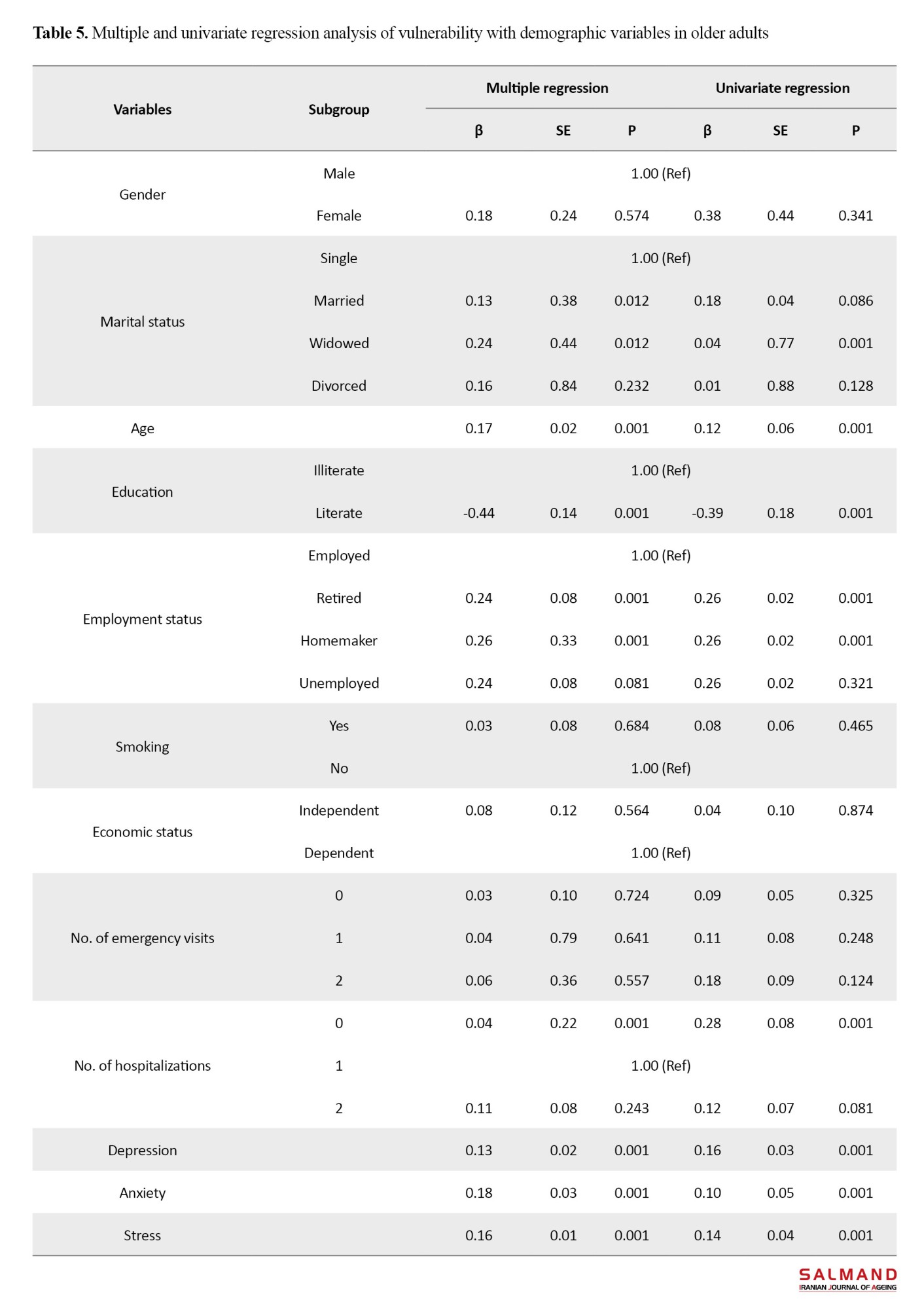
The results of both multiple and univariate regression analyses showed that age, education, marital status, employment status, frequency of hospitalization, depression, anxiety, and stress were significant predictors of frailty syndrome in the elderly (Table 5).
Conclusion
Frailty syndrome is associated with depression, anxiety, and stress in the elderly. Given the high prevalence of depression, anxiety, and stress among vulnerable elderly individuals, and the significant relationship between frailty and these factors which can lead to adverse health outcomes, interventions aimed at reducing depression, anxiety, and stress are crucial. By focusing on reducing psychological disorders, effective steps can be taken to prevent the onset of frailty syndrome in the elderly. Identifying elderly individuals with psychological disorders and monitoring them periodically, alongside identifying frail individuals, can significantly contribute to improving elderly health. Early screening and diagnosis among younger elderly populations are necessary to identify those at risk and intervene early to prevent their progression to full frailty.
Ethical Considerations
Compliance with ethical guidelines
This study was approved by the Ethics Committee of the Ardabil University of Medical Sciences, Ardabil, Iran. (Code: IR.ARUMS.REC.1402.165). Initially, the objectives of the research were explained to all participants, and written informed consent was obtained. Participants were assured that all collected information would remain confidential.
Funding
The research did not receive any financial resources from governmental, private, or non-profit organizations.
Authors' contributions
All authors contributed equally to the conception and design of the study, data collection and analysis, interpretation of the results, and drafting of the manuscript. Each author approved the final version of the manuscript for submission.
Conflicts of interest
The authors declared no conflicts of interest.
Acknowledgments
Sincere thanks are extended to all the staff of the emergency departments at Imam Khomeini (Ra), Imam Reza (A), Alavi, and Fatemi Hospitals in Ardabil.
References
The major concern regarding the growth of the elderly population is the increasing prevalence of chronic diseases and disabilities conditions associated with the aging process, which require special attention [3]. Frailty is a clinical syndrome accompanied by changes in multiple physiological systems, reduced physiological reserve capacity, and impaired ability to respond to stress [5]. This syndrome is associated with weakness, weight loss, burnout, reduced daily activity, and an increased incidence of diseases in the individual [6]. At least one out of every four elderly patients undergoing treatment suffers from disorders such as depression, anxiety, and stress. Psychological disorders, due to their negative impact on the health of the elderly, can serve as a precursor to the development of frailty syndrome [15]. The present study aimed to determine the relationship between anxiety, stress, and depression and frailty syndrome in home-dwelling elderly individuals in Ardabil City in 2023.
Methods & Materials
The present descriptive-analytical was conducted after obtaining approval from the Ethics Committee and the Research Deputy of Ardabil University of Medical Sciences. The study population consisted of elderly individuals aged 60 years and older who visited the emergency departments of teaching hospitals in Ardabil City in 2023. A convenience sampling method was employed. Inclusion criteria for the study were: Age of 60 years or older, the ability to communicate verbally, no permanent dependence on a wheelchair, no blindness or severe visual impairment that leads to dependency, and no complete deafness or severe hearing loss that hinders clear communication. The exclusion criterion was the submission of incomplete questionnaires.
The research setting included the emergency departments of Imam Khomeini, Imam Reza, Alavi, and Fatemi hospitals in Ardabil City, where participants were recruited and informed consent was obtained. The Fried Frailty Index, developed in 2001, was used to assess frailty syndrome in older adults. This index includes five items: general fatigue, muscle weakness, walking speed, low levels of physical activity, and weight loss. Data analysis was performed using SPSS software, version 22. To determine the statistical tests for comparing demographic variables, anxiety, stress, depression, and the main research variable, the normality of the distribution of continuous variables was first examined. According to the results of the Kolmogorov-Smirnov test, no significant deviation from a normal distribution was found for any of the continuous variables (P>0.05). Given the normality of the data distribution, parametric tests, including analysis of variance (ANOVA), independent t-test, Pearson correlation coefficient, and multiple linear regression analysis, were used to explore the relationships between the variables and identify predictors of anxiety, stress, and depression.
Results
Of the 505 elderly participants in this study, with a mean age of 73.46±6.38 years, 52% were male. The majority of the participants were married (63.3%) and illiterate (61.9%). Also, 57.2% were economically independent, and 70% had visited the emergency department of the hospital at least once (Table 1).
The results showed that 44.16% of the elderly were frail, 38.82% were at risk of frailty, and 17.02% were not frail. The frailty index had a statistically significant relationship with the variables of gender, marital status, age, education level (literate and illiterate), employment status, frequency of emergency department visits, frequency of hospitalizations, and economic status (P<0.05) (Table 2).
In addition, 51.08% of the elderly experienced depression, 50.69% had anxiety, and 59% suffered from stress. The results of the Pearson correlation test indicated a positive and significant correlation between frailty syndrome and depression, anxiety, and stress (Table 3).
The highest mean levels of depression, anxiety, and stress were observed in individuals with frailty, with values of 15.34±1.8, 16.41±1.9, and 18.14±1.5, respectively. Based on the results of ANOVA, a significant difference was found in the mean levels of stress, anxiety, and depression among the frailty groups (Table 4).
The results of both multiple and univariate regression analyses showed that age, education, marital status, employment status, frequency of hospitalization, depression, anxiety, and stress were significant predictors of frailty syndrome in the elderly (Table 5).
Conclusion
Frailty syndrome is associated with depression, anxiety, and stress in the elderly. Given the high prevalence of depression, anxiety, and stress among vulnerable elderly individuals, and the significant relationship between frailty and these factors which can lead to adverse health outcomes, interventions aimed at reducing depression, anxiety, and stress are crucial. By focusing on reducing psychological disorders, effective steps can be taken to prevent the onset of frailty syndrome in the elderly. Identifying elderly individuals with psychological disorders and monitoring them periodically, alongside identifying frail individuals, can significantly contribute to improving elderly health. Early screening and diagnosis among younger elderly populations are necessary to identify those at risk and intervene early to prevent their progression to full frailty.
Ethical Considerations
Compliance with ethical guidelines
This study was approved by the Ethics Committee of the Ardabil University of Medical Sciences, Ardabil, Iran. (Code: IR.ARUMS.REC.1402.165). Initially, the objectives of the research were explained to all participants, and written informed consent was obtained. Participants were assured that all collected information would remain confidential.
Funding
The research did not receive any financial resources from governmental, private, or non-profit organizations.
Authors' contributions
All authors contributed equally to the conception and design of the study, data collection and analysis, interpretation of the results, and drafting of the manuscript. Each author approved the final version of the manuscript for submission.
Conflicts of interest
The authors declared no conflicts of interest.
Acknowledgments
Sincere thanks are extended to all the staff of the emergency departments at Imam Khomeini (Ra), Imam Reza (A), Alavi, and Fatemi Hospitals in Ardabil.
References
- Aghmashe R, Alavi-Naeini A, Mirzaei K, Yekaninejad M. [Relationship between Dietary Patterns and Moderate Frailty Syndrome in Elderly (Persian)]. Iranian Journal of Nutrition Sciences and Food Technology. 2017; 12(3):19-28. [Link]
- Yeghaneh B, Einalia J, Charaghi M, Eskandari Shahraki Z. [Evaluation of quality of life and vulnerability components of elderly women in rural areas case study: Zanjan city (Persian)]. Journal of Gerontology. 2019; 3(4):67-77. [Link]
- Hosseini MA, Mehri S, Fallahi-Khoshknab M, Mohammadi-Shahbelaghi F, Akbari-Zardkhaneh S. The status of ageism in caring for elderly patients from nurses’ perspective. Journal of Client-Centered Nursing Care. 2020; 6(4):289-96. [DOI:10.32598/JCCNC.6.4.346.1]
- Asadi H, Habibi soola A, Iranpour S. [Prevalence of frailty and related factors in the elderly referred to the emergency department of Ardabil medical education centers in 2020 (Persian)]. Journal of Gerontology. 2021; 6(2):64-76. [Link]
- Asadi H, Habibi Soola A, Iranpour S. Evaluation of the relationship between frailty and polypharmacy in the elderly referred to the emergency departments of Ardabil 2019. Salmand: Iranian Journal of Ageing 2022; 16(4):550-63. [DOI:10.32598/sija.2021.2999.2]
- Dent E, Martin FC, Bergman H, Woo J, Romero-Ortuno R, Walston JD. Management of frailty: Opportunities, challenges, and future directions.The Lancet. 2019; 394(10206):1376-86. [DOI:10.1016/S0140-6736(19)31785-4] [PMID]
- Uchmanowicz I, Lomper K, Gros M, Kałużna-Oleksy M, Jankowska EA, Rosińczuk J, et al. Assessment of frailty and occurrence of anxiety and depression in elderly patients with atrial fibrillation. Clinical Interventions in Aging. 2020:1151-61. [DOI:10.2147/CIA.S258634] [PMID]
- Nasrollahi G, Rashedi V, Khodabandelou N, Habibi M, Shariati B. Prevalence of substance abuse, mental health and frailty among elderly hospitalized in Hazrat-e Rasoul Hospital. Journal of Gerontology. 2020; 4(4):1-7. [DOI:10.29252/joge.4.3.1]
- Kajsa E, Katarina W, Sten L, Synneve ID. Screening for frailty among older emergency department visitors: Validation of the new FRESH-screening instrument. BMC Emergency Medicine. 2016; 16:1-7. [DOI:10.1186/s12873-016-0087-0] [PMID]
- Liu H, Yang X, Guo LL, Li JL, Xu G, Lei Y, et al. Frailty and incident depressive symptoms during short-and long-term follow-up period in the middle-aged and elderly: Findings from the Chinese Nationwide cohort study. Frontiers in Psychiatry. 2022; 13:848849. [DOI:10.3389/fpsyt.2022.848849] [PMID]
- Lewis ET, Dent E, Alkhouri H, Kellett J, Williamson M, Asha S, et al. Which frailty scale for patients admitted via Emergency Department? A cohort study. Archives of Gerontology and Geriatrics. 2019; 80:104-14. [DOI:10.1016/j.archger.2018.11.002] [PMID]
- Rockwood K. What would make a definition of frailty successful? Age and Ageing. 2005; 34(5):432-4. [DOI:10.1093/ageing/afi146] [PMID]
- Devkota S, Anderson B, Soiza RL, Myint PK. Prevalence and determinants of frailty and associated comorbidities among older Gurkha welfare pensioners in Nepal. Geriatrics & Gerontology International. 2017; 17(12):2493-9. [DOI:10.1111/ggi.13113] [PMID]
- Halter JB, Ouslander JG, Tinetti M, Studenski S, High KP, Asthana S. Hazzard’s geriatric medicine and gerontology. 6th ed. Washington: McGraw-Hill Medical; 2008. [Link]
- Mhaolain AMN, Fan CW, Romero-Ortuno R, Cogan L, Cunningham C, Kenny RA, et al. Frailty, depression, and anxiety in later life. International Psychogeriatrics. 2012; 24(8):1265-74. [DOI:10.1017/S1041610211002110] [PMID]
- Feng L, Nyunt MSZ, Feng L, Yap KB, Ng TP. Frailty predicts new and persistent depressive symptoms among community-dwelling older adults: Findings from Singapore longitudinal aging study. Journal of the American Medical Directors Association. 2014; 15(1):76. e7. [DOI:10.1016/j.jamda.2013.10.001] [PMID]
- Almeida OP, Hankey GJ, Yeap BB, Golledge J, Norman PE, Flicker L. Depression, frailty, and all-cause mortality: a cohort study of men older than 75 years. Journal of the American Medical Directors Association. 2015; 16(4):296-300. [DOI:10.1016/j.jamda.2014.10.023] [PMID]
- Soysal P, Veronese N, Thompson T, Kahl KG, Fernandes BS, Prina AM, et al. Relationship between depression and frailty in older adults: A systematic review and meta-analysis. Ageing Research Reviews. 2017; 36:78-87. [DOI:10.1016/j.arr.2017.03.005] [PMID]
- Vaughan L, Corbin AL, Goveas JS. Depression and frailty in later life: A systematic review. Clinical Interventions in Aging. 2015:1947-58. [DOI:10.2147/CIA.S69632] [PMID]
- Fried LP, Tangen CM, Walston J, Newman AB, Hirsch C, Gottdiener J, et al. Frailty in older adults: evidence for a phenotype. The Journals of Gerontology Series A. 2001; 56(3):146-57. [DOI:10.1093/gerona/56.3.M146] [PMID]
- Sahebi A, Asghari MJ, Salari RS. Validation of Depression Anxiety and Stress Scale (DASS-21) for an Iranian Population. Journal of Developmental Psychology Iranian Psychologists. 2005; 4(1):36-54. [Link]
- Uchmanowicz I, Gobbens RJ. The relationship between frailty, anxiety and depression, and health-related quality of life in elderly patients with heart failure. Clinical Interventions in Aging. 2015:1595-600. [DOI:10.2147/CIA.S90077] [PMID]
- Marconcin P, Barak S, Ferrari G, Gouveia ÉR, de Maio Nascimento M, Willig R, et al. Prevalence of frailty and its association with depressive symptoms among European older adults from 17 countries: A 5-year longitudinal study.International Journal of Environmental Research and Public Health. 2022; 19(21):14055. [DOI:10.3390/ijerph192114055] [PMID]
- Tan M, Bhanu C, Frost R. The association between frailty and anxiety: A systematic review. International Journal of Geriatric Psychiatry. 2023; 38(5):e5918. [DOI:10.1002/gps.5918] [PMID]
- Yin H, Gao C, Quan Z, Zhang Y.The relationship between frailty, walking ability, and depression in elderly Chinese people. Medicine. 2023; 102(45):e35876. [DOI:10.1097/MD.0000000000035876] [PMID]
- Saeidimehr S, Delbari A, Zanjari N, Fadaye Vatan R. Factors related to frailty among older adults in Khuzestan, Iran. Iranian Journal of Ageing. 2021; 16(2):202-17. [DOI:10.32598/sija.16.2.1600.1]
- Dianati M, Shojaegharebag G, Mesdaghinia A, Taghadosi M, Shenasa F, Taiebi A, et al. [Polypharmacy and its related factors among the elderly population in Kashan, Iran during 2011-2012 (Persian)]. Feyz Journal of Kashan University of Medical Sciences. 2015; 18(6):578-84. [Link]
Type of Study: Research |
Subject:
gerontology
Received: 2024/06/23 | Accepted: 2025/01/06 | Published: 2026/04/01
Received: 2024/06/23 | Accepted: 2025/01/06 | Published: 2026/04/01
Send email to the article author
| Rights and permissions | |
 |
This work is licensed under a Creative Commons Attribution-NonCommercial 4.0 International License. |

Copyright © The Author(s);
This is an open access article distributed under the terms of the Creative Commons Attribution-NonCommercial 4.0 (CC-By-NC 4.0), which permits use, distribution, and reproduction in any medium, provided the original work is properly cited and is not used for commercial purposes.
Contact Information